A rare ingredient
Real scarcity starts in the supply chain, not the marketing.
An extraordinary fruit.
A remarkable ingredient.
A new beauty story.
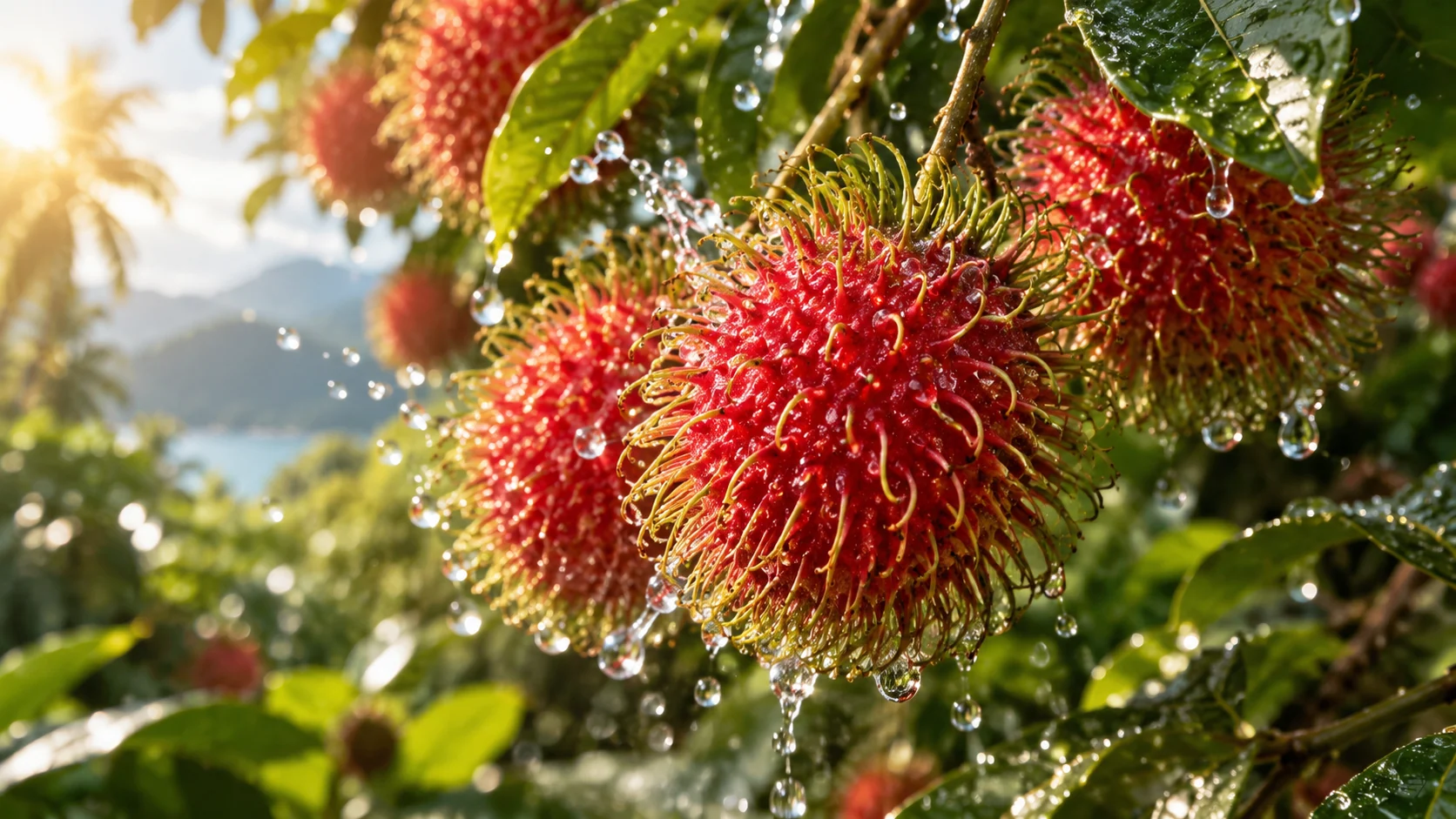
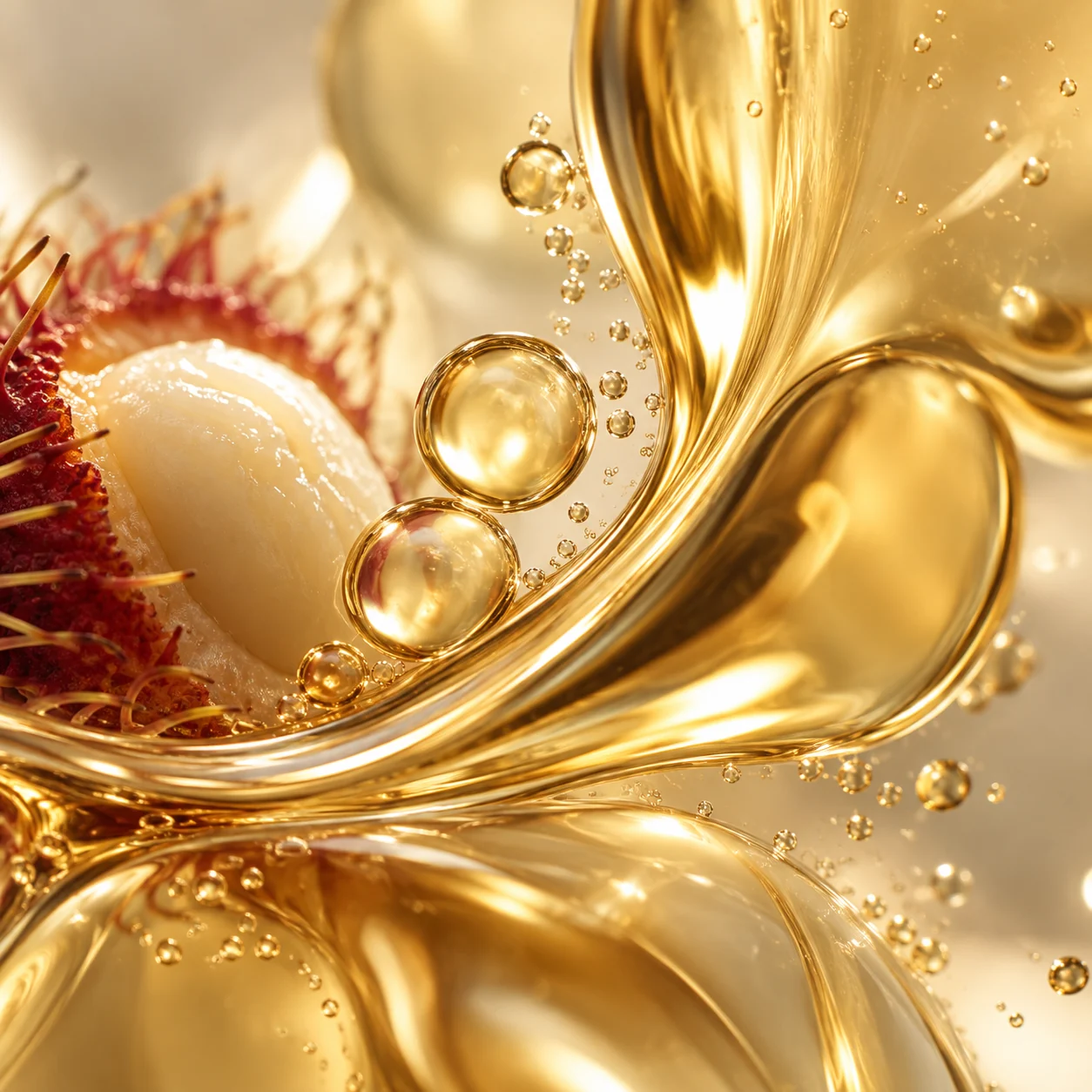
Rambutan (Nephelium lappaceum) is a tropical fruit from Southeast Asia. Its vibrant red shell and soft, hair-like spines make it hard to forget once you've seen one.
Inside is translucent flesh wrapped around a seed. That overlooked seed, the part most people throw away, is where the RUMÉA story begins.
Rather than treating rambutan as another exotic flavor or trend, Vin Beauty Products is exploring its seed as a premium modern beauty ingredient.
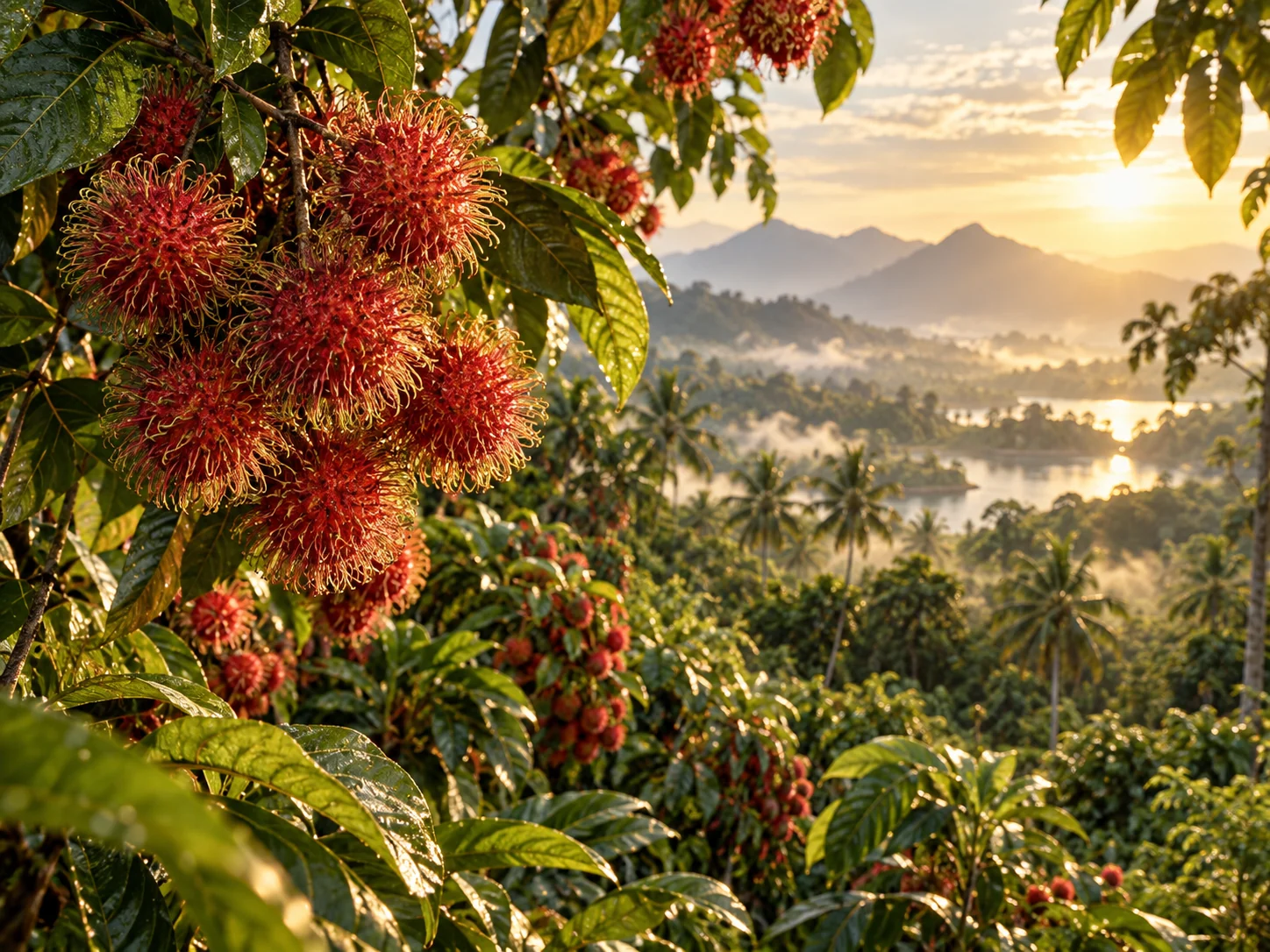
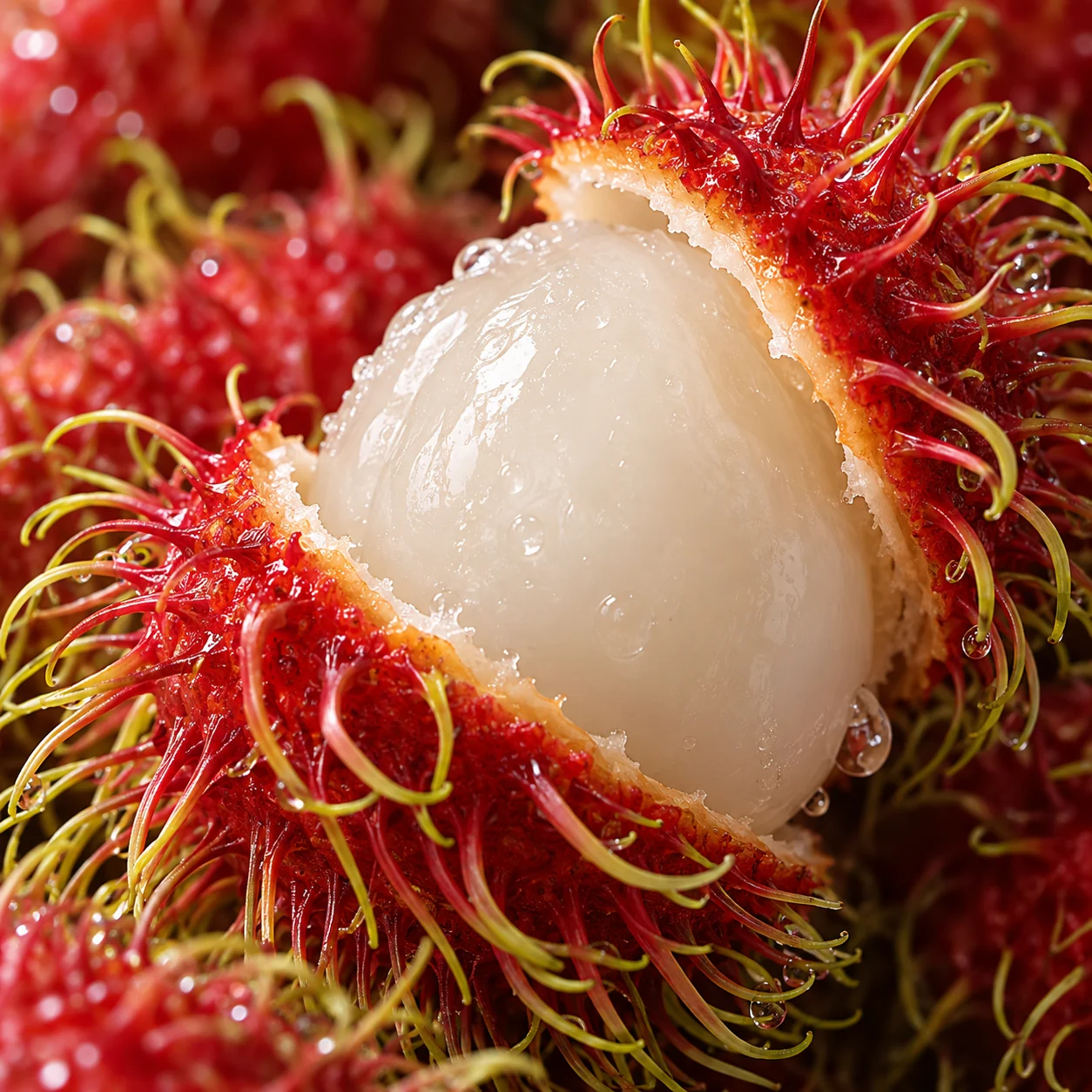
Bright red or reddish-orange skin covered in soft, flexible spines. Peel it open and you'll find smooth, translucent flesh around a single seed.
The unusual appearance is part of the appeal, but for RUMÉA the interesting part isn't what you eat. It's the seed.
Inside each rambutan is a seed holding naturally occurring oil and fat. Processed and separated, that material opens up two different possibilities.
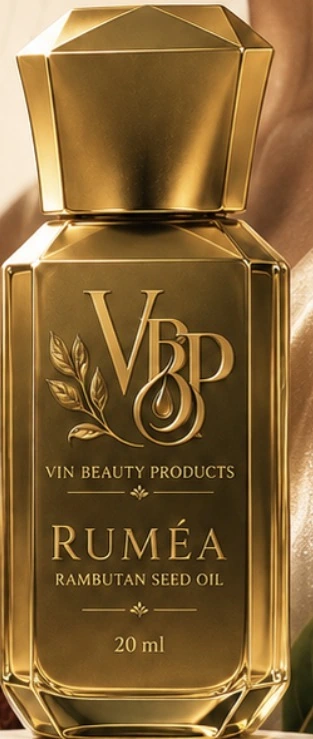
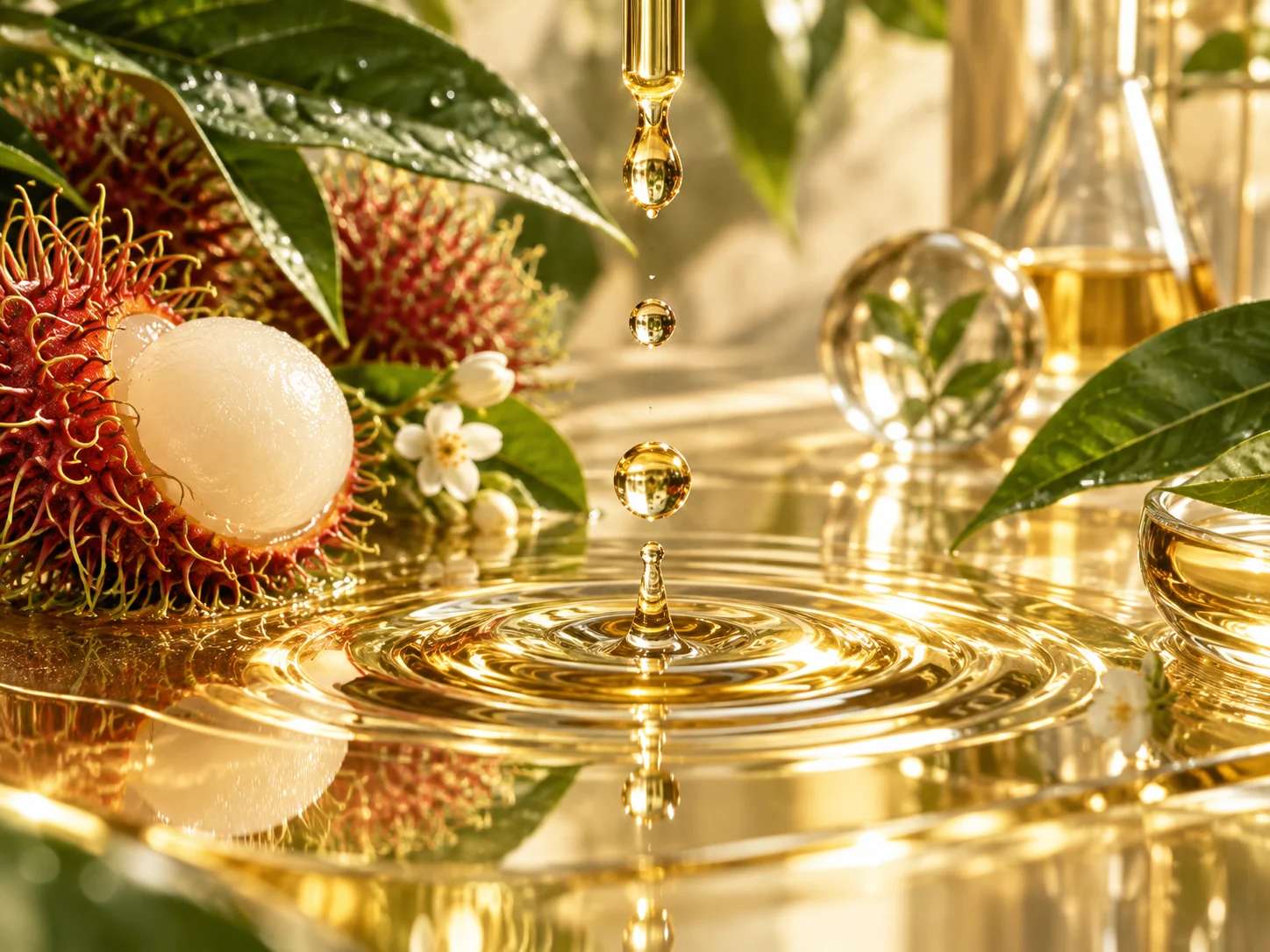
The liquid fraction becomes RUMÉA Rambutan Seed Oil, a concentrated beauty oil for light use across face, body and hair.
The richer solid fraction is being explored as RUMÉA Butter, keeping the ingredient's natural identity instead of turning it into a conventional cream.
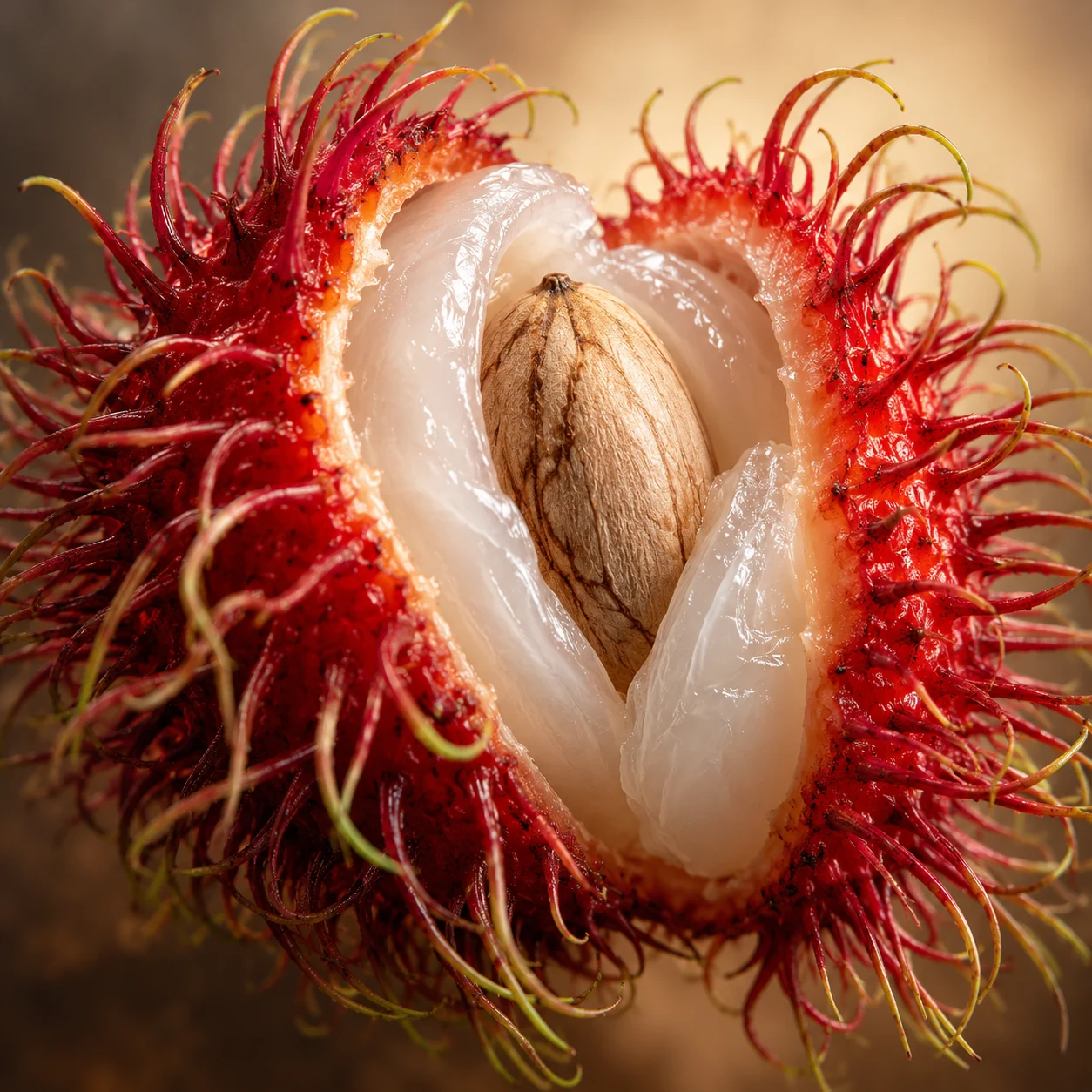
Rambutan seed oil is discussed for its naturally occurring lipid-rich composition and its usefulness as a conditioning, emollient ingredient.
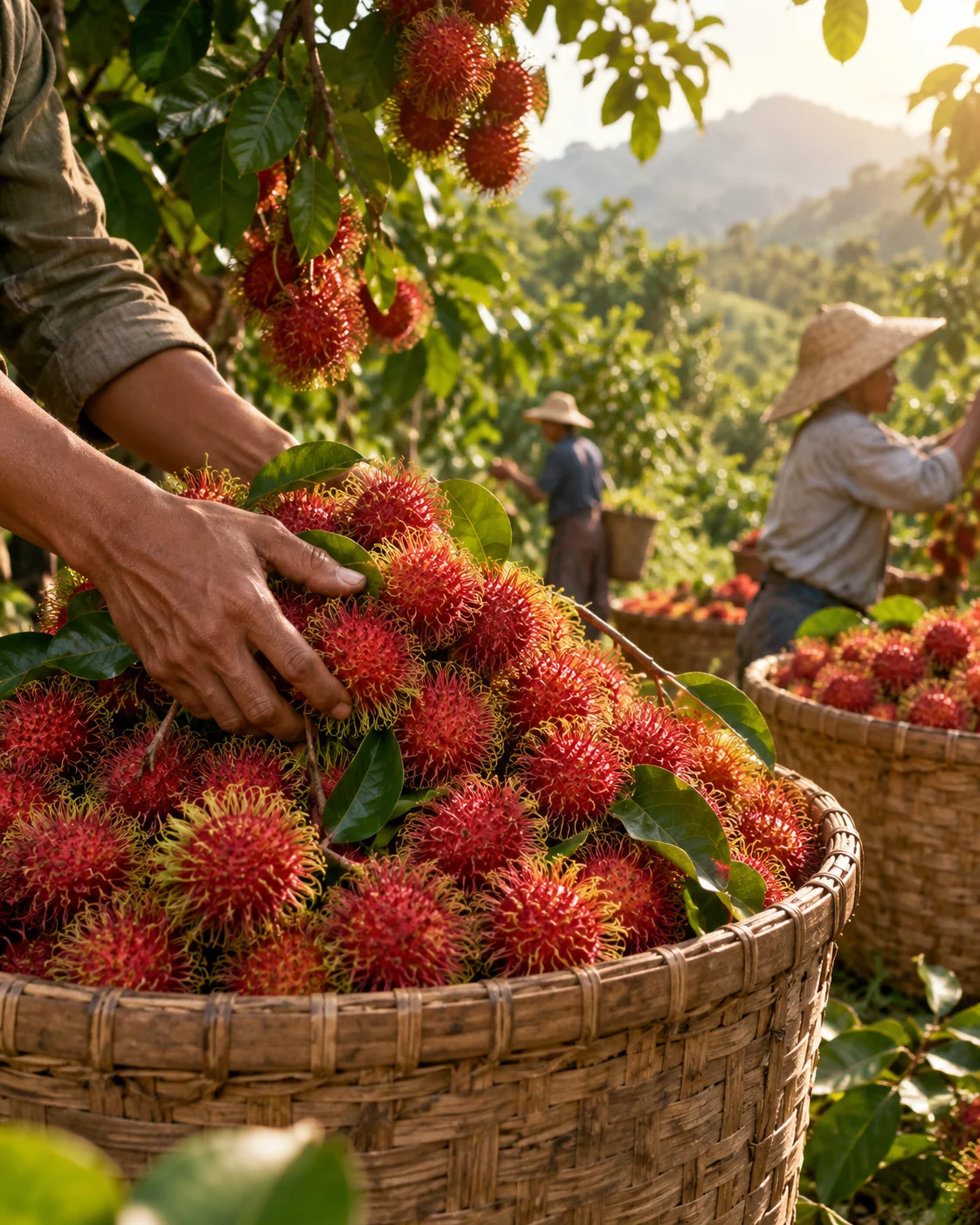
Rambutan thrives in tropical climates across Southeast Asia. The RUMÉA story is built around authentic sourcing, careful processing and a clear picture of how the seed travels from fruit to finished beauty oil.
Sourcing locations and processing details will be published here as they're confirmed.
Real scarcity starts in the supply chain, not the marketing.
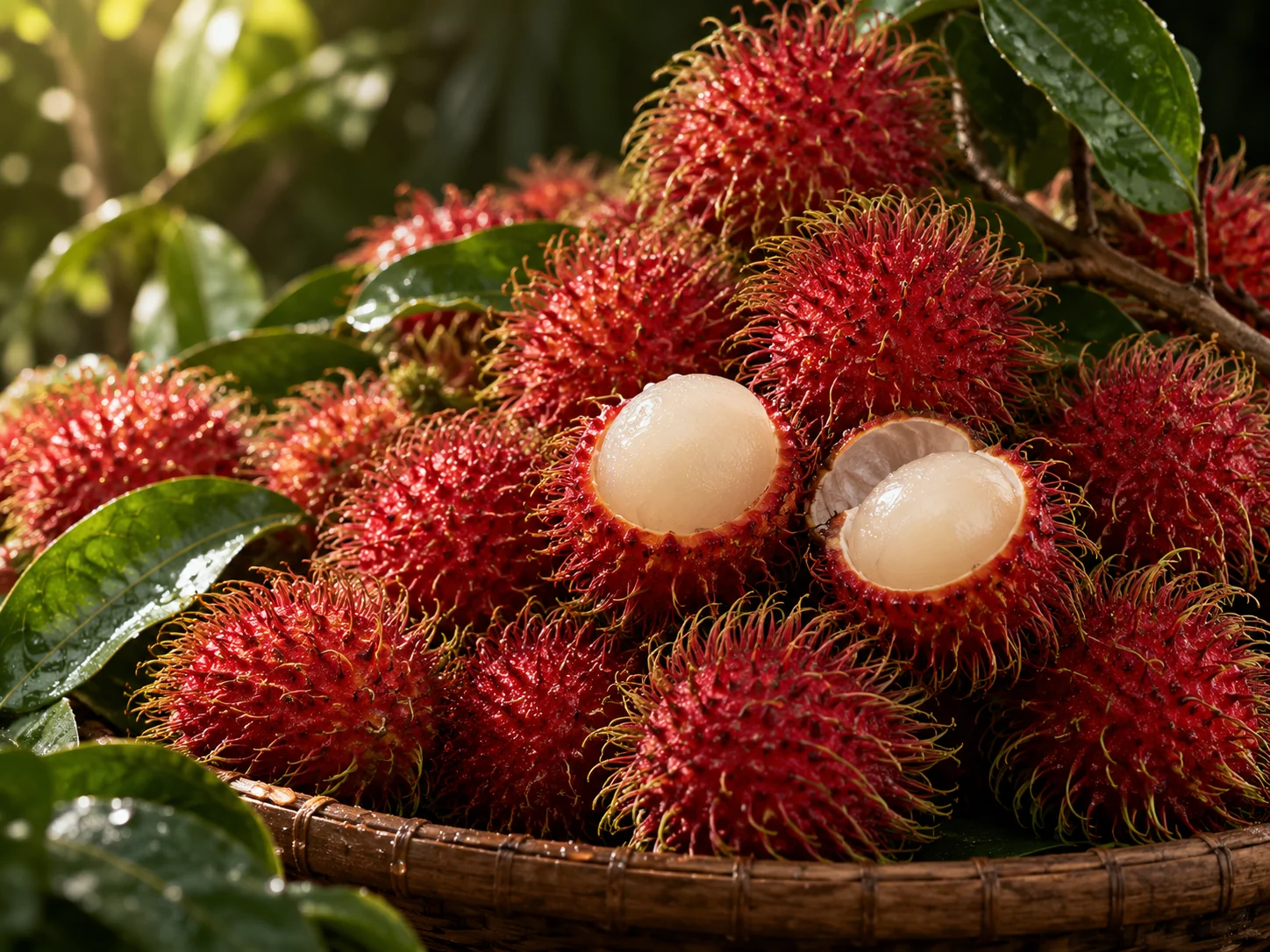
A botanical material with modern cosmetic possibilities.
Ingredient discovery meets education and community.
Rambutan is a tropical fruit from Southeast Asia known for its bright red, soft-spined skin and translucent flesh. RUMÉA focuses on the seed inside the fruit, not the part you eat.
No. They're related and often compared because both have translucent flesh, but rambutan is a different fruit with a hairy red shell where lychee has a bumpy pink one.
The seed. RUMÉA is made from material derived from the rambutan seed rather than the edible fruit flesh.
The seed contains naturally occurring oil and fat. Once processed and separated, those fractions can be used in different ways: the liquid oil becomes RUMÉA Rambutan Seed Oil, the richer solid fraction is being explored as RUMÉA Butter.
Rambutan is still unfamiliar to most US beauty shoppers, and the seed is usually discarded. That's part of the discovery, and why we built this page before launch.
Yes, in a practical sense. The fruit is seasonal, the seeds have to be recovered before they're thrown away, and processing them into a finished oil is a multi-step job with a small yield.
RUMÉA Butter and a rambutan facial-mask concept are being explored, with more botanical ingredients possible later.
RUMÉA is built around simplicity: a small amount, used thoughtfully, wherever your routine needs extra conditioning.
See how to use RUMÉAIngredient education, launch updates and the first chance to experience RUMÉA Rambutan Seed Oil, all starting from one overlooked seed.