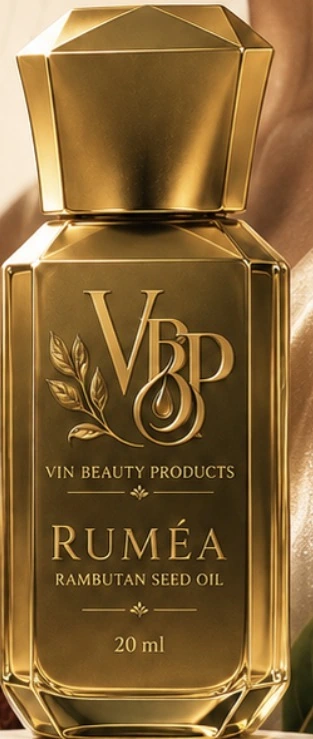
Fatty acids
The building blocks of natural oils and fats. They shape texture, spreadability and how the oil behaves on skin.
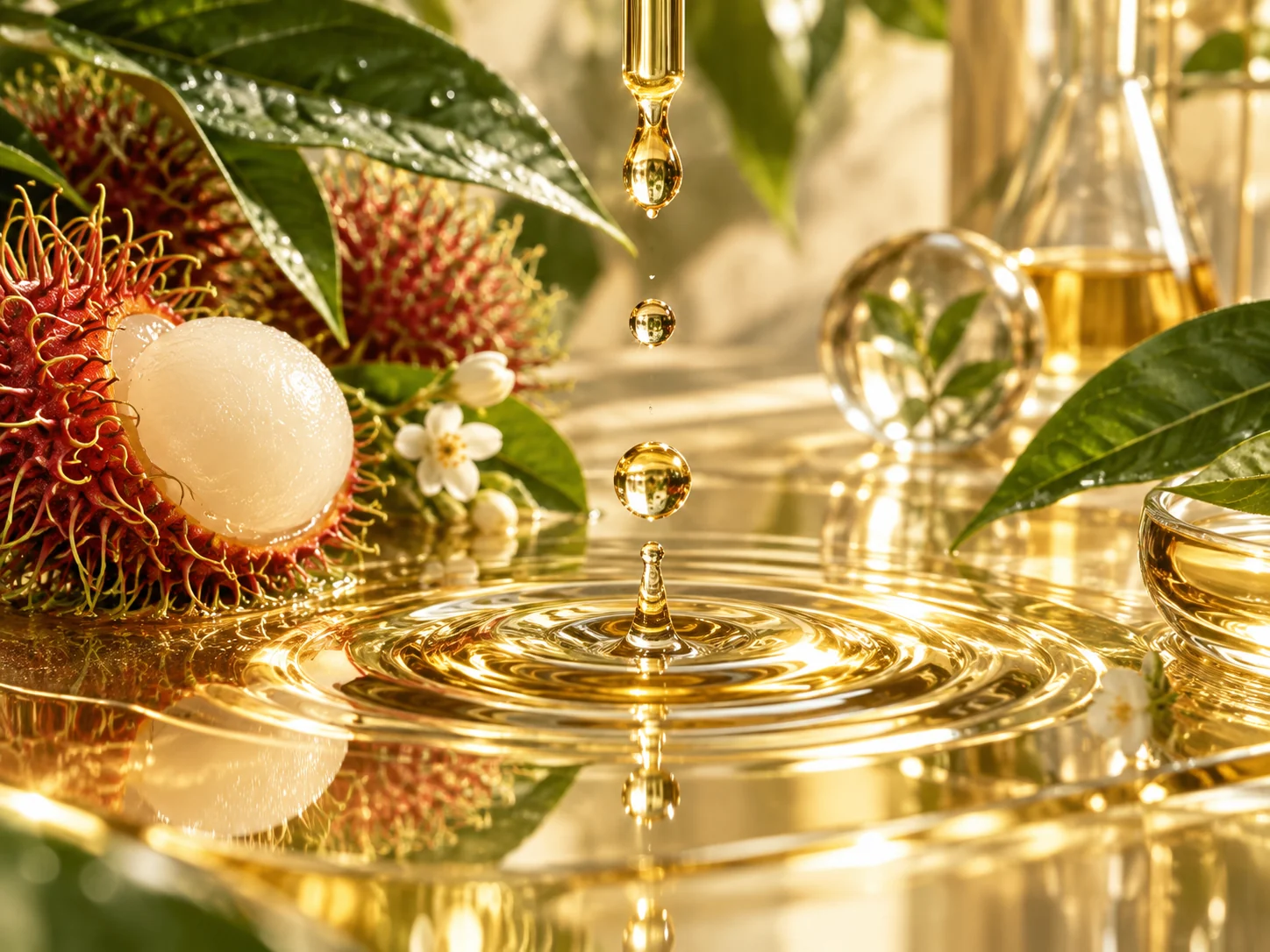
From tropical fruit to refined botanical oil. What's inside the seed, how the oil is made, and why the ingredient is interesting in modern beauty.
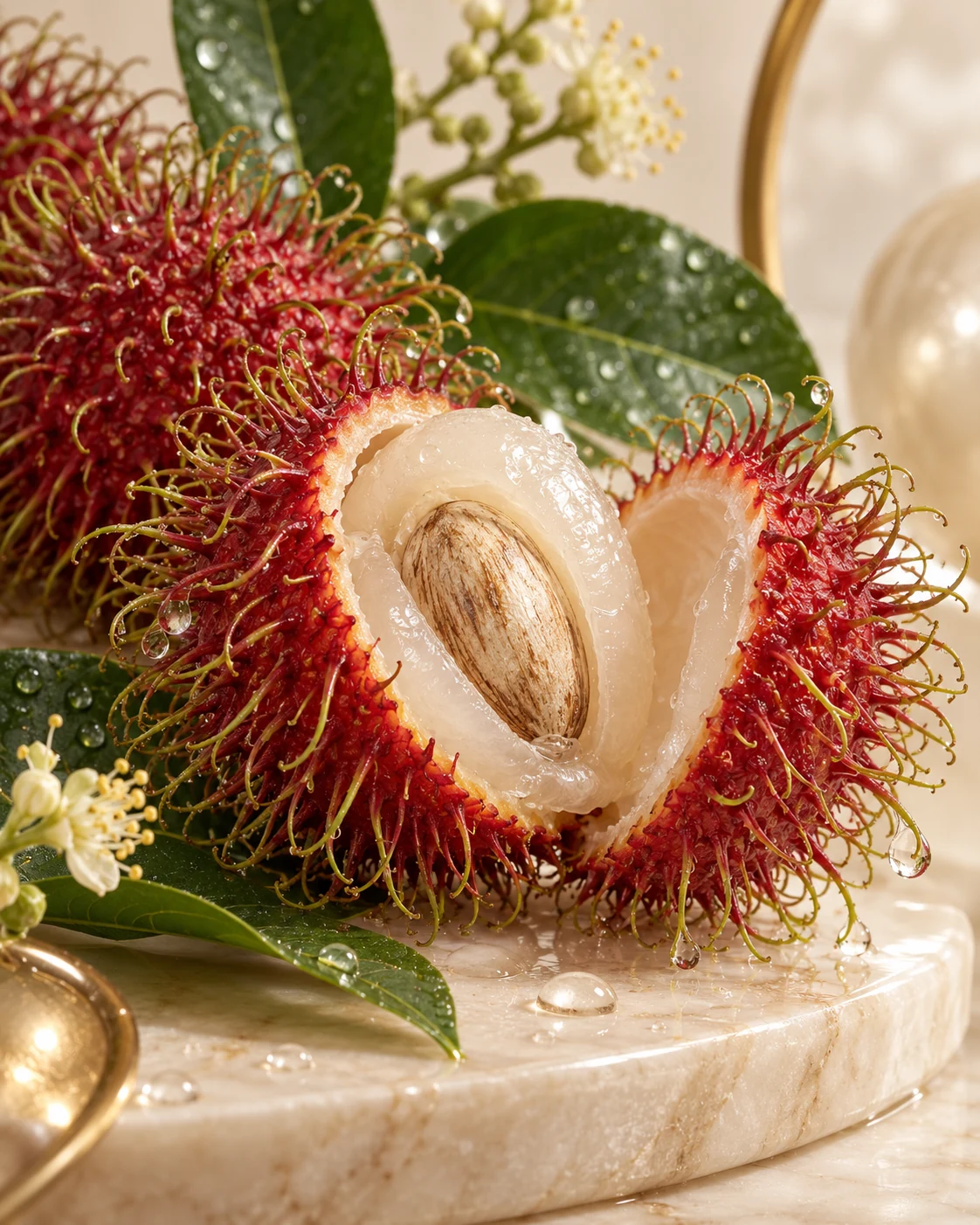
Rambutan seed contains naturally occurring oil and fat. Those lipids are the starting point for the ingredient's texture, its conditioning feel and the two different fractions that can be produced from one seed.
The building blocks of natural oils and fats. They shape texture, spreadability and how the oil behaves on skin.
Naturally occurring compounds of interest in botanical and cosmetic research.
Plant-derived compounds often discussed alongside cosmetic conditioning ingredients.
Oil-based ingredients help skin feel softer, smoother and more conditioned.
The process is one of the most important parts of the RUMÉA story. Seven steps take a seed most people throw away and turn it into a finished beauty oil.
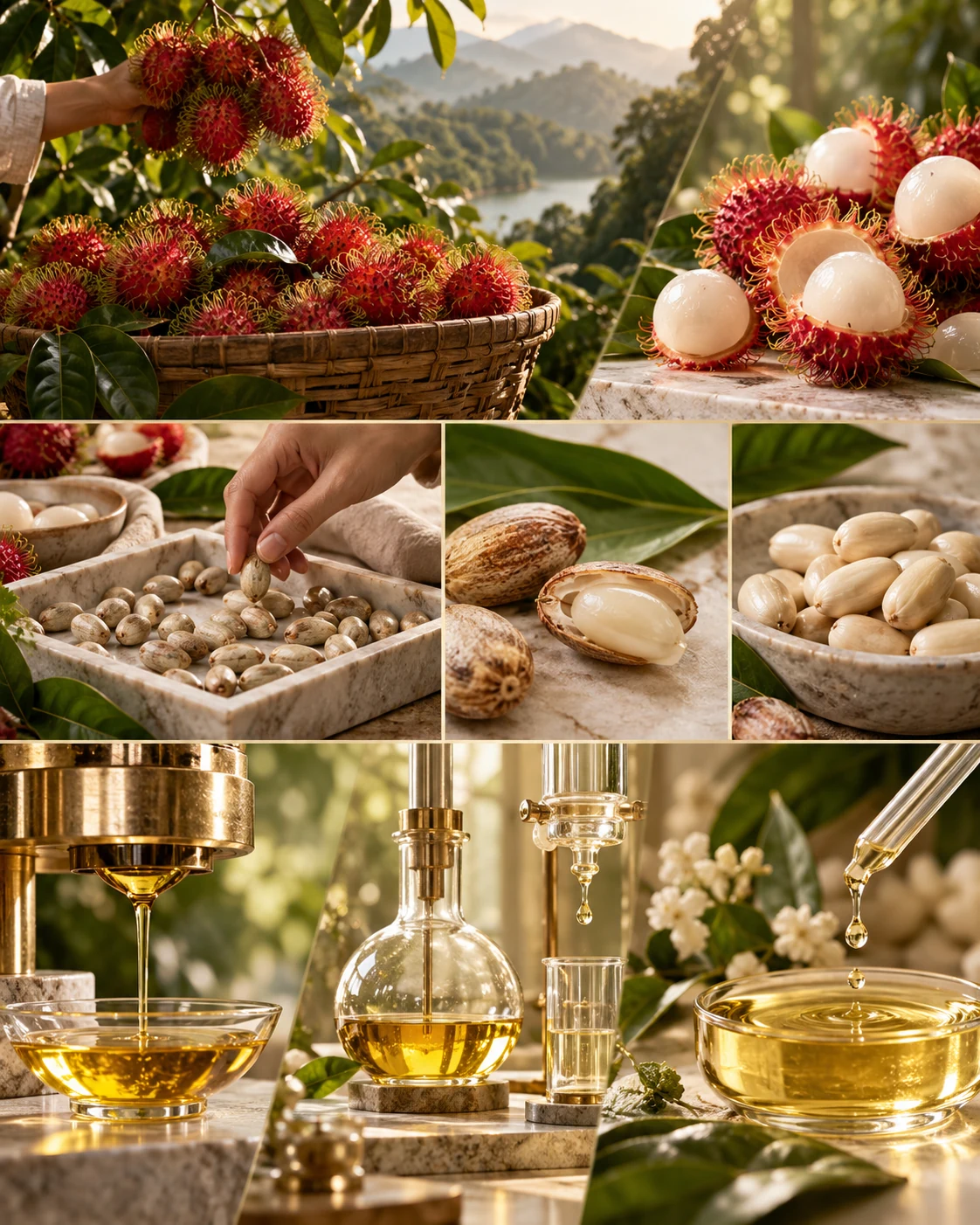
Fresh rambutan comes in during its seasonal harvest.
The fruit is processed and the seed separated from the surrounding flesh.
Recovered seeds are cleaned and prepared for extraction.
The naturally occurring oil and fat are drawn out of the prepared seed.
The material splits into a liquid oil fraction and a richer solid fraction.
The oil goes through finishing and filtration steps to make it ready for cosmetic use.
The finished oil is checked, stored and bottled as RUMÉA.
Rambutan seed material gives a lighter liquid fraction and a richer solid one. Two different beauty experiences from the same botanical source.
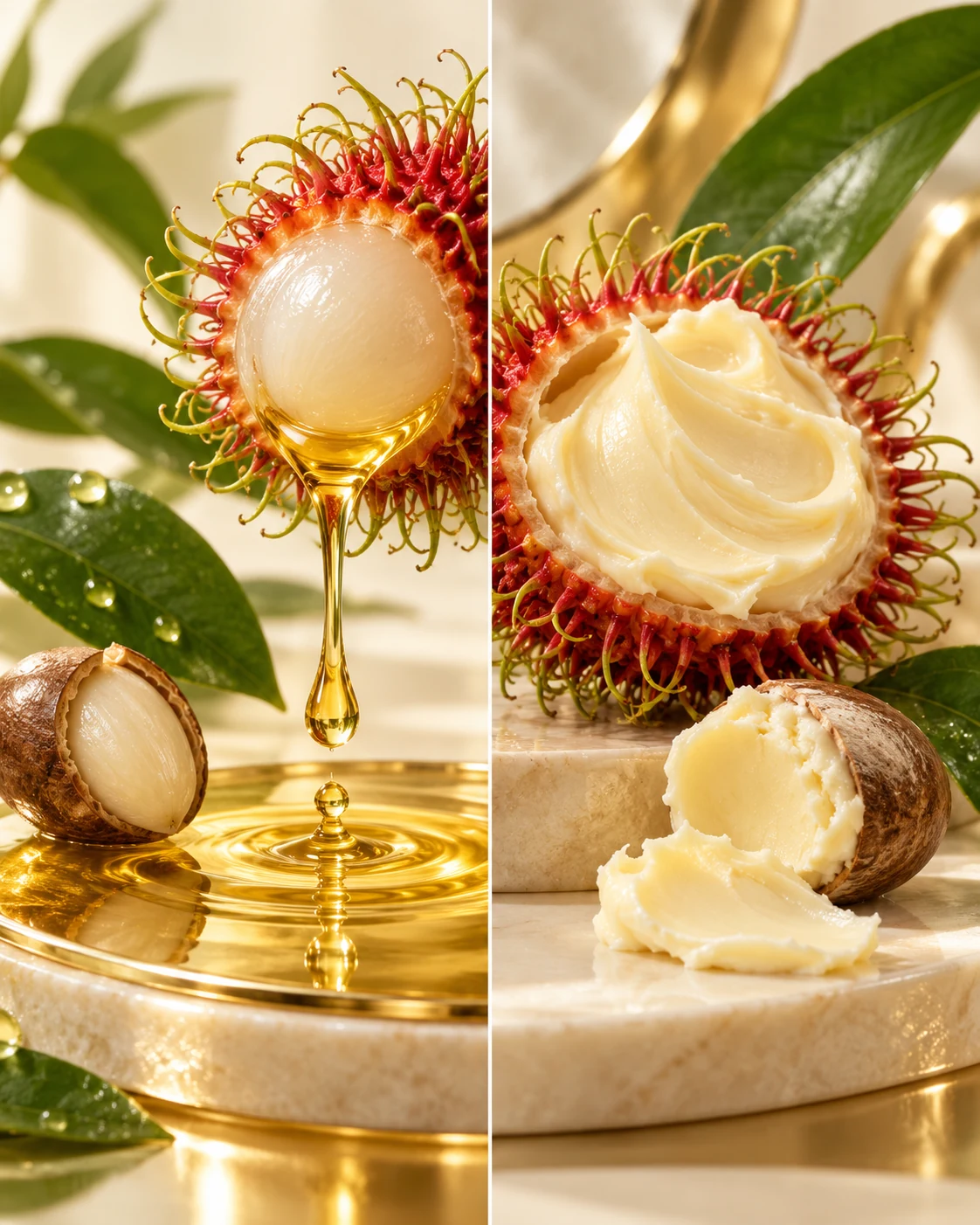
A concentrated liquid beauty oil designed for a few drops at a time across face, body and hair.
A richer butter-like concept that keeps the natural character of the rambutan-derived material.
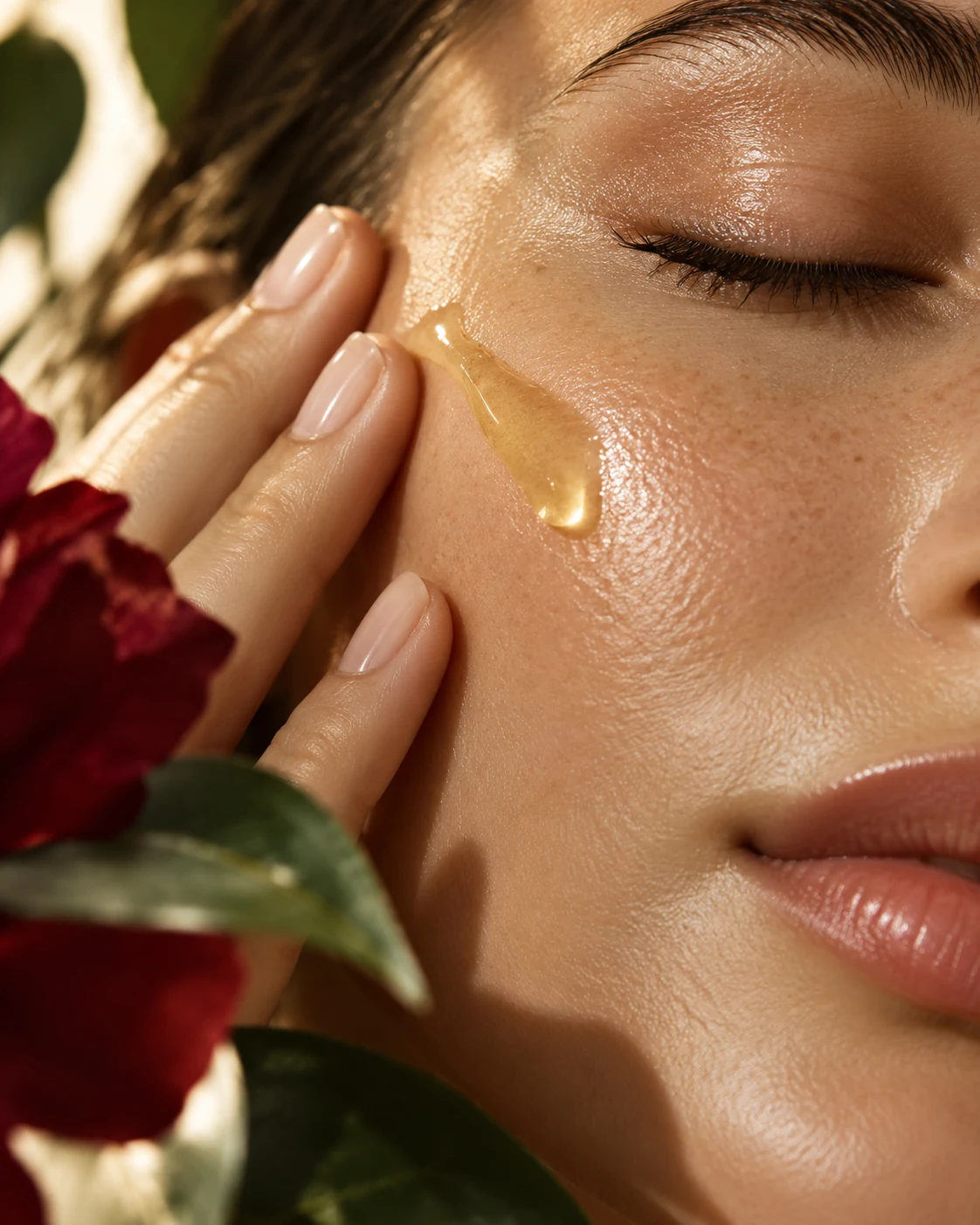
The science is only useful when it turns into a simple, good-feeling step in your routine.
Helps skin feel softer, smoother and more conditioned.
Oil-based conditioning helps take away that dry, stripped feeling at the surface.
Built for small amounts, not heavy layers.
Fits face, body and hair routines when used as directed on the label.
An emollient is an ingredient that helps soften and smooth the skin surface.
Botanical oils are commonly used this way. Applied in a thin layer, they help condition rough-feeling areas and leave skin feeling more supple and comfortable.
Emollience describes how the skin surface feels after an oil-based ingredient goes on. It's a cosmetic function, not a medical claim.
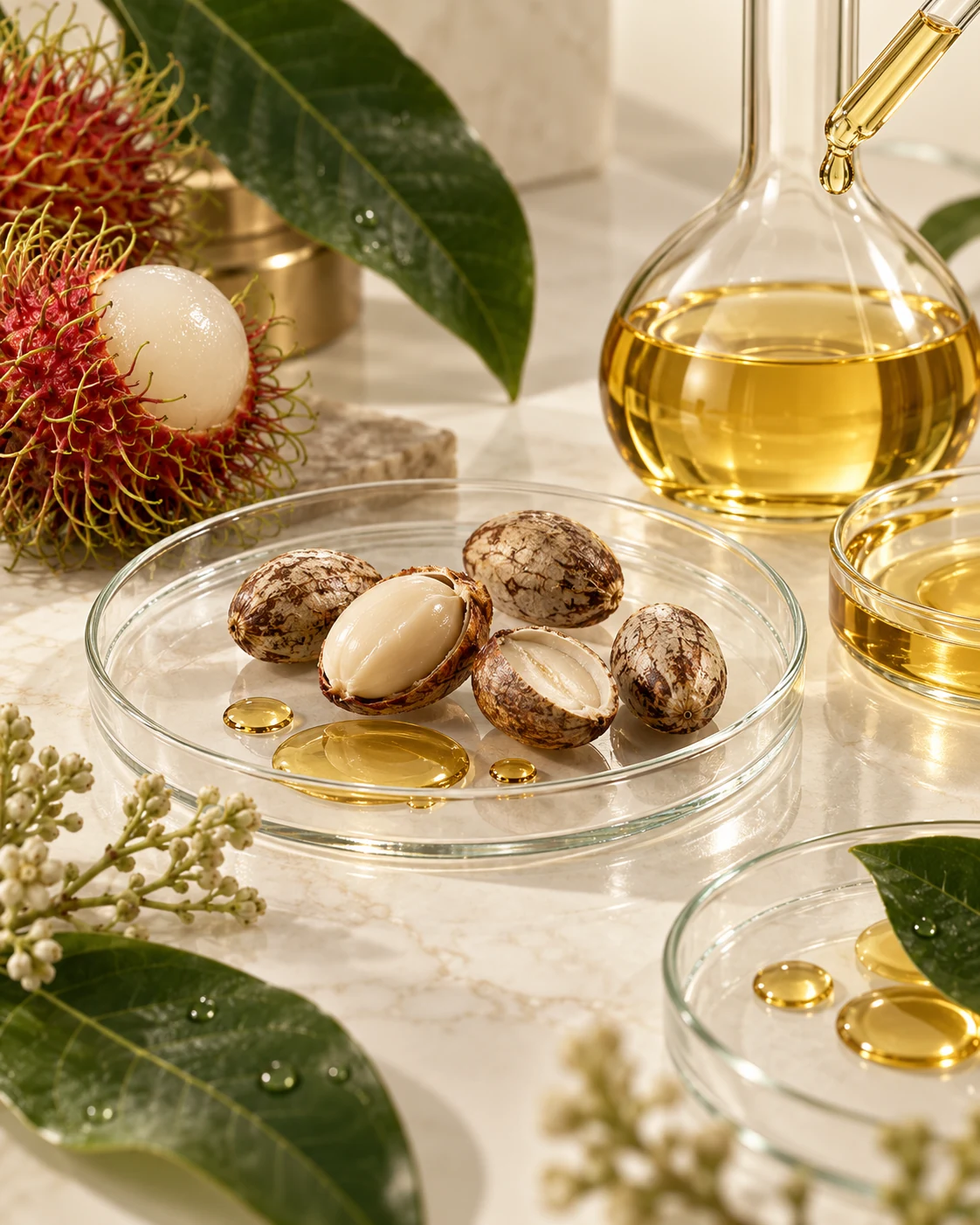
Botanical oils are shaped by how the raw material is handled, processed, stored and protected. Every one of those steps can change texture, stability, aroma, consistency and finished quality.
Extraction, emollients, cold pressing and what to look for on an ingredient label.
The seed is recovered from the fruit, cleaned and prepared, then the naturally occurring oil and fat are extracted. That material separates into a liquid oil fraction and a richer solid fraction, and the oil is filtered and finished for cosmetic use.
An emollient is a cosmetic ingredient that helps soften and smooth the skin surface. Botanical oils like rambutan seed oil are commonly used for this purpose.
RUMÉA is a concentrated oil meant to be used a few drops at a time, so it's applied as a thin layer rather than a heavy one. Warm it between your fingertips and press it in for the lightest finish.
Both come from the same rambutan seed material. The oil is the lighter liquid fraction. RUMÉA Butter is being developed around the richer solid fraction.
Cold pressing means the oil is obtained mechanically, by pressing the seed, without intentionally applying high heat. It's a gentler way to get oil out of a seed.
On an ingredient list rambutan seed oil appears as Nephelium Lappaceum Seed Oil, after the botanical name of the rambutan tree.
Now you know what's in the bottle and how it got there. Next: where it fits in your routine.